Advantages of Hair Transplant Compared to Wigs
You may enjoy feeling about the way you want to look if you experience baldness or any degree of shedding hair. Although a complete head of hair is more desirable and a symbol of both health and strength, this is normal. To evaluate the benefits of hair solutions and hair transplant treatment, let us just think positively. You may come to recognize why people are more willing to recommend hair transplantation for better performance by considering some key advantages of each one.
The key benefit is savings compared with hair transplant operation systems. There are far more accessible specially made wigs than experiencing a complete surgical hair transplant. There is no chance of contamination because there is no operation included, risks are reduced to zero. However, over a period, the hair process can need modification, restoration, or alterations.
Many individuals who get wigs are thrilled with the outcome as they have reasonable expectations about the performance. Healthy hair programs are imperceptible to many individuals if you find what you’re going for.
It can be incredibly disturbing to lose your hair and can also make several individuals feel peer about their appearance. Luckily, if you struggle with hair loss, there are several surgical and non-surgical options now known that can benefit you.
Perma is one of the 2 most frequent hair loss remedies. Although both have benefits in promising to regrow hair and improve trust, there are also drawbacks to note.
Take a look at the full guide will help you better appreciate the key differences and figure out which one is right for you:
You May Also Like: What is a Natural Hair Transplant
A Multifaceted Comparison: Hair Transplant vs. Hairpiece
This section provides a detailed and balanced comparison between hair transplantation and hairpieces, based on the foundational pillars mentioned above.
The following table is designed to give readers a general overview, offering a quick summary of the key differences before delving into the details.
| Feature | Hair Transplant | Wig / Hair Systems |
|---|---|---|
| Result Timeline | Gradual (Final results take 12-18 months) | Instant |
| Permanence | Permanent, lifelong solution | Temporary, requires replacement (every 1-2 years) |
| Appearance | Completely natural (one’s own growing hair) | Can look natural, but carries a risk of appearing artificial |
| Initial Cost | High (One-time investment) | Low to Medium |
| Long-Term Cost | Low (Standard hair care) | High (Recurring replacement, maintenance, products) |
| Maintenance | Low (Washed and styled like normal hair) | High (Special cleaning, styling, regular servicing) |
| Lifestyle Impact | No restrictions after recovery (sports, swimming) | Significant restrictions on certain activities |
| Psychological Feeling | Reclaimed self-esteem, authenticity | Can provide confidence, but may create anxiety/insecurity |
| Procedure | Minimally invasive surgery with a recovery period | Non-invasive, no recovery time |
| Risks | Surgical risks (infection, scarring), shock loss | Scalp irritation, allergies, damage to existing hair |
The Financial Reality: Initial Cost vs. Lifetime Value
The financial decision is often the most tangible starting point. However, when making this choice, it is critical to focus not just on the initial price tag, but on the total cost of ownership over time.
Hair Transplant: A One-Time Investment
The initial cost of a hair transplant can be a significant sum, depending on the number of grafts and the clinic, typically ranging from 50,000 TL to 120,000 TL. This can be viewed as a substantial capital outlay. However, the most important characteristic of this cost is that it is a one-time event. Once this initial investment is made, ongoing maintenance expenses do not extend beyond normal hair care routines like standard haircuts and shampooing. This makes a hair transplant a predictable, long-term asset.
Hairpiece: A Recurring Subscription Model
Hairpieces may initially appear to be a much more affordable option. The cost of a quality hairpiece can start from a few hundred dollars. However, this is only the beginning of the story. Hairpiece ownership is akin to a subscription model with hidden and continuous costs. Expenses include monthly professional servicing, specialized shampoos, adhesives, and most significantly, the necessity of completely replacing the hairpiece itself every 1-2 years. This creates an unpredictable and perpetual stream of expenses.
10-Year Cost Analysis
Creating a concrete cost projection, rather than using abstract statements, clearly reveals the financial disparity between the two options. Below is a hypothetical yet realistic 10-year cost analysis:
Hair Transplant Scenario:
- Year 1: 80,000 TL (Procedure Cost)
- Years 2-10: 0 TL (No extra maintenance costs)
- 10-Year Total Cost: 80,000 TL
High-Quality Hairpiece Scenario:
- Year 1: 15,000 TL (Hairpiece + initial care products and application)
- Year 2: 15,000 TL (New hairpiece + maintenance)
- …and so on, continuing each year.
- 10-Year Total Cost: 150,000 TL+
This analysis demonstrates that, in the long run, the cost of hairpieces can easily surpass that of a hair transplant procedure, which initially seems more expensive. Financially, a hair transplant is a “buy it and forget it” investment, whereas a hairpiece is a service that requires continuous payment.
Permanent Wigs
Wigs are bits of hair, either made from synthetic fibers or genuine human hair. Synthesized wigs can not be modeled but will retain their form, while human hair extensions can be designed as your real hair with a flat iron or hairdryer.
There are many explanations why wigs are preferred by people. For people receiving medical care such as cancer treatment, they are highly helpful.
Advantages of wearing wigs are:
Immediate responses: you wouldn’t have to struggle for a hair surgery to start, wigs will instantly improve your appearance.
Boundless Fashions: Wigs come in various styles and shades. Without fully committing to one style, you can modify your hairdo whenever you like!
Simplicity: When you feel the need to wear them, wigs are simple to put on and can be used.
Disadvantages of wearing wigs are:
- Cleanup and Grooming: For your wig, you need to follow a strict gentle exfoliation, particularly if you’d like to keep your hairpiece as fresh as possible.
- Natural-looking Damage: Wig covers can harm your forehead and inhibit natural development.
- Uneasy: Wigs can be uneasy when kept wearing for a longer period. They could not only feel uncomfortably hot in summer, but they can also lead to headaches, itchiness, and scratching.
- Limits Your Activity: It’s not a practical thing to do exercise, swim, or sleep wearing a hairpiece. It can also fall off at any time as it’s not attached to your head.
Hair Transplant Surgery
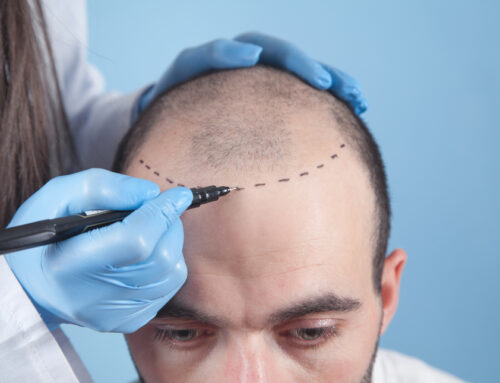
A hair surgical procedure is a cosmetic type of surgery to cure baldness under general anesthetic. Both hair transplants include bringing hair follicles from a region of the head that is unlikely to be affected by hair loss and transplanting them onto hairline receding or balding areas of the scalp, although different methods are employed this is the most common.
Advantages of Hair Transplant Surgery are:
- Requires Real Hair: The real hair removed from your head is used in the process. It gradually develops the same color as your current hair.
- Permanent Cure: Hair surgical procedure is most frequently a one-time treatment for natural hair growth and a long-term solution.
- Low Grooming: Once your hair starts growing, as grafted hair functions, there is limited upkeep.
Because it is the method of implantation of your hair extracted from the scalp donor site, the hair develops gradually after the procedure. The replacement aims to give the individuals the most normal, and stubble looks. It brings you the perfect fit for your real hair in terms of color and hair type. As there are benefits and drawbacks of both but we recommend you go for what suits you the best.
Living with a Hairpiece: The Constant Burden of Planning
The use of a hairpiece necessitates constant micro-management and planning in daily life. Swimming is a major source of anxiety, requiring special adhesives or caps, yet still carrying the risk of an embarrassing moment. Sleeping with a hairpiece is not recommended as it can damage both the unit itself and the user’s own scalp and remaining hair. Intense exercise and perspiration can create uncomfortable and unhygienic conditions and may reduce the efficacy of the bonding agent.
This creates a lifestyle where spontaneous activities become risky and always require forethought. Many people experiencing hair loss feel a disconnect between their physical appearance and their internal self-image (young, active, confident). A hairpiece can feel like a temporary patch that fails to resolve this fundamental disharmony.
A hair transplant, by contrast, permanently closes this gap by restoring the individual’s own growing hair. The benefit is not just “being able to swim,” but “being able to be the spontaneous, active person you feel you are inside, without any restrictions.”
Frequently Asked Questions
Last Update : 03.10.2025