
Beard Transplant in Turkey
Beard transplant is the process in which hair follicles are taken from suitable areas. Transplanted in the facial hair area where there is a noticable sparse or complete bread shedding.
Beard Transplant Cost
The price for beard transplant in Turkey is 1800 euros. The Turkey package includes accommodation, transfer, interpreter services, and post-procedure care products. This price is valid for the year 2025. You can obtain information about more details and payment options from our WhatsApp line.
All-Inclusive Beard Transplant Package (Turkey)
- Consultation
- FUE (Sapphire or DHI) Beard Transplant.
- Maximum Grafts
- 3-4 nights in a 4 or 5-star partner hotel
- All VIP airport, hotel, and clinic transfers
- special shampoo, lotion, and care kit
- First hair wash
- Personal host/interpreter services (in your native language)
Surgical Report Card
| Procedure Location: | Istanbul |
|---|---|
| Anesthesia | Local |
| Pain/Discomfort | Only during the numbing process |
| First Wash | Day 2 |
| Duration of Stay in Turkey | 4 days |
| Technique | FUE Method |
Who Should Undergo Beard Transplantation?
Beard transplantation is easily performed in individuals with no facial hair growth, who grow sparse facial hair, experience patchy facial hair after an accident or those who undergo gender-change surgery.
How Is it Performed?
First, the doctor and the patient must establish a plan before the procedure. In accordance with this plan, approximately 1000-3000 grafts may be implanted if the area of the beard is free of hair. The procedures take between 2 and 5 hours and are performed under local anesthesia.
These grafts are obtained from the scalp, anterior neck or body hair. The procedure does not leave any marks or traces in the donor area.
Transplantation is usually performed by FUE method in which hair follicles are extracted through fine-tipped needles less than 1 mm and transplanted into the site lacking hair.
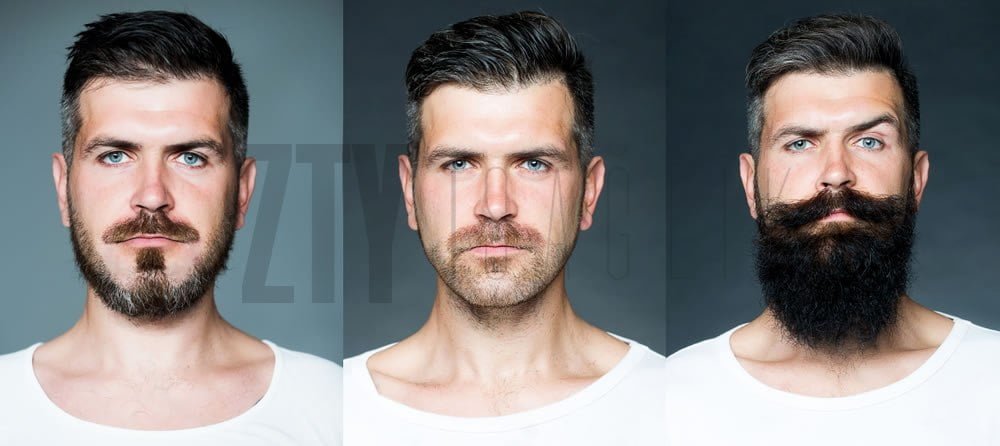
Immediately after the transplantation process, blood clots come out of the extraction points and may leave redness on the skin. The redness and traces on the face disappear after they are washed on the 3rd postoperative day leaving the patient with a natural newly-shaved appearance. Beard Transplant in Turkey
What Are the Postoperative Instructions?
The transplantation site should not be contacted with hand or water. It is recommended to lie on back and refrain from friction so that the scabs will not collect blood and the transplanted follicles will be well attached to the skin. No pieces of cloting such as a scarf, turtleneck and so on should be used until the healing process is completed.
It is also important to refrain from activities which may lead to blood thinning such as sexual intercourse and active sports practices until the area is healed.
Why Beard Transplantation?
In general, the beard line and beard density which become more apparent in men at the age of 18 do not grow in a very desirable way in some men due to genetical causes. It may have a negative psychological effect as the facial hair will appear sparse or patchy.
In such cases, if necessary, patients may be operated after completing 21 or 18 years of age. will be implemented.
Does Transplanted Hair Fall Out After the Surgery?
Shock hair loss usually happens within two weeks after the transplant, when the new hair grafts enter an adaptation phase. However, it should be noted that this process will be between 4 to 8 months. It should be noted that shredded hair will not grow at the same level with the remaining beard in a 1-month period. In addition, the increase in hair growth in the transplantation area may not only be due to the implanted grafts, but also be due to strengthened follicles in the adjacent area.

Where is Beard Transplantation Performed?
Beard transplantation is performed in our Istanbul clinics located in Fulya and Etiler.
Before and After Beard Transplantation
Before you decide on a beard transplantation, you can reach our assistant and ask for the before and after photos of the operations performed by our doctors.
Beard Transplantation: Aesthetic Design by Facial Shape
Beard design is a surgical-aesthetic procedure used to harmonize facial proportions. The transplant is not merely about adding hair; it is about sculpting shadows and lines to enhance or balance the underlying skeletal structure.
- Oval Face: Considered morphologically balanced. The design focuses on complementing existing features with natural, proportionate density rather than correcting structure.
- Square Face (Wide Mandible):
- Objective: To soften strong angularity and add vertical length.
- Technique: The design emphasizes greater density/length at the chin (mental protuberance) while keeping the sideburns and cheek density (mandibular angle) tighter. This vertically elongates the facial appearance.
- Round Face (Lacks Definition):
- Objective: To create angularity, structure, and the illusion of length.
- Technique: The design establishes stronger, defined lines (e.g., lower cheek lines) and concentrates density vertically in the chin/goatee area. The sides (cheeks) are kept leaner to avoid adding horizontal width.
The Science of Donor Area Management and Preservation
The “donor area” (typically the occipital and parietal scalp) is a finite resource. Effective donor management is the surgical practice of harvesting follicular units (FUs) in a manner that preserves the long-term aesthetic integrity of the area, ensuring viability for potential future transplant sessions.
Our protocol is based on Strategic Diffuse Extraction (SDE):
- Homogeneous Distribution: We calculate the patient’s total donor capacity and harvest FUs in a widely distributed, non-patterned manner across the entire Safe Donor Area (SDA). This avoids “over-harvesting” or “patch-harvesting” from a single locus, which creates localized hypodensity (a “moth-eaten” appearance).
- Density Threshold Management: We adhere to strict extraction density thresholds, ensuring that a significant percentage of native follicles (typically >70-75%) remain untouched within any given $cm^2$. This maintains visual coverage and density.
- Micro-Punch Instrumentation: We utilize small-diameter punches (e.g., $0.7\text{ mm}$ – $0.9\text{ mm}$). This minimizes the extraction footprint, reduces transepidermal trauma, and preserves the micro-vasculature, leading to superior healing and less cumulative scarring.
This strategic approach maximizes the graft yield for the current procedure while simultaneously banking viable follicles, thus preserving the donor “capital” for any future sessions required due to progressive alopecia or a desire for further density.
The Art of Follicular Microdistribution: Crafting Soft Borders vs. Dense Cheeks
Achieving a natural beard transplant is a biphasic process, demanding the strategic separation and placement of follicular units (FUs) based on the number of hairs they contain. The aesthetic goal is to replicate nature, which never creates harsh lines.
1. Single-Hair Follicular Units: The “Artistic” Grafts
- Purpose: To create the “transition zone.” These grafts are the key to naturalism and are responsible for all soft-edge work.
- Technique (Feathering): We meticulously sort and reserve all 1-hair FUs. These are implanted at a lower density and in a deliberately irregular pattern along the most peripheral borders of the design.
- Placement:
- The absolute superior border (the cheek line).
- The inferior border (the defined neckline).
- The vermilion border of the mustache.
- The anterior transition zone where the sideburn blends into the cheek.
- Result: This technique creates a soft, feathered, and gradual transition from non-hirsute skin to the denser beard, completely avoiding the artificial, “penciled-in” or “plug-like” appearance.
2. Multi-Hair Follicular Units (2-3+ Hairs): The “Density” Grafts
- Purpose: To build the primary bulk, volume, and coverage of the beard.
- Technique (Density Building): These more robust grafts, which contain 2, 3, or sometimes 4 hairs, are grouped together to create fullness.
- Placement: These are placed posterior to the single-hair transition zone. They are implanted in the central, “power” areas of the beard.
- The main body of the cheeks.
- The mental protuberance (chin) and the parasymphyseal (goatee) area.
- The core of the mustache.
- Result: This provides the robust, full, and dense appearance that defines a masculine beard, ensuring the fill is substantial and not sparse.
Conclusion: This dual-graft strategy is non-negotiable. Naturalism is achieved at the borders with single-hair FUs, while density is achieved in the core with multi-hair FUs.
The Role of Platelet-Rich Plasma (PRP) in Beard Transplantation
Platelet-Rich Plasma (PRP) is an autologous biologic therapy used as an adjunctive treatment in beard transplantation to significantly enhance the wound-healing cascade and support follicular viability.
Its mechanism is rooted in delivering a high concentration of endogenous growth factors (GFs) directly to the recipient and donor sites.
Mechanism of Action and Benefits:
- Graft Survival (Neovascularization):
- PRP is rich in GFs, including Vascular Endothelial Growth Factor (VEGF) and Platelet-Derived Growth Factor (PDGF).
- These GFs stimulate angiogenesis (the formation of new micro-capillaries) around the implanted follicular unit.
- This enhanced vascular network improves perfusion, ensuring a more rapid and robust delivery of oxygen and nutrients to the grafts during the critical initial 72-hour phase, thereby increasing the overall survival rate.
- Accelerated Wound Healing (Tissue Regeneration):
- The growth factors in PRP (particularly Transforming Growth Factor-beta, TGF-β) accelerate the epithelial and endothelial regeneration of the micro-incisions in both the recipient (beard) and donor (scalp) areas.
- This leads to faster crusting (scab) resolution, reduced post-operative erythema (redness), and minimized evidence of the procedure.
- Optimization of the Follicular Environment:
- PRP can be used as a holding solution for grafts ex vivo (outside the body). Bathing the follicles in this nutrient-rich medium helps mitigate ischemic-reperfusion injury and desiccation, preserving their viability before implantation.
- When injected, it also modulates inflammation and may reduce the severity of post-operative telogen effluvium (“shock loss”) by supporting follicular stem cells in the bulge region.
Gender-Affirming Beard Transplantation for Transgender Men (FTM): A Sensitive Aesthetic Guide
For transgender men (FTM), beard transplantation transcends a standard cosmetic procedure; it is one of the most powerful and effective methods of gender affirmation. This procedure complements the masculinization process initiated by testosterone (T) therapy, fully aligning the external appearance with the individual’s internal identity.
Our approach for this specific demographic is centered on profound sensitivity and a unique set of aesthetic goals:
1. Beyond Hormone Therapy: Overcoming Genetic Limitations Testosterone (T) therapy activates existing vellus follicles in the face. However, the final pattern, density, and coverage of the beard are dictated entirely by genetics. Many trans men, even after years on T, cannot achieve their desired full, masculine beard due to genetically programmed sparsity or gaps. Beard transplantation overcomes this barrier by filling these genetic voids.
2. The Role of Design: Resculpting the Face For FTM individuals, beard design is not just about implanting hair; it is an optical facial masculinization.
- Objective: To strengthen, sharpen, and create a more “squared” appearance in the lower facial third, which may present with softer contours.
- Strategy: Rather than passively following the existing bone structure, the design is actively used to build an idealized male jawline. The sideburns, mandibular angle, and mental protuberance (chin) are strategically densified to add angle and definition to the face.
3. The Superior Donor Area Advantage Transgender men typically do not experience, or experience much later, androgenetic alopecia (male pattern baldness). This means their occipital donor area is exceptionally dense, healthy, and robust with permanent grafts. This is an immense advantage, allowing for the high graft counts (e.g., 3,000-5,000 grafts) often required for a full beard restoration to be harvested safely in a single session.
4. The Psychological and Social Impact The outcome of this procedure is not merely physical. It fundamentally improves social “passing” (e.g., being correctly addressed as “sir”). The beard is one of the most prominent secondary male sex characteristics; its presence can significantly reduce gender dysphoria and radically increase self-confidence.
In our clinic, we perform this procedure with technical excellence in a supportive, affirming, and respectful environment that honors each individual’s unique journey.
Beard Transplantation for Scar Camouflage
Beard transplantation is an effective microsurgical technique to conceal facial scars resulting from acne, trauma, or cleft lip repair.
This is a specialized procedure, as scar tissue (cicatricial tissue) is fibrotic and hypovascular (has reduced blood supply).
Our protocol involves:
- Strategic Implantation: Placing follicular units directly into the scar to cover the fibrotic tissue and bridge hairless gaps.
- Vascular Enhancement: Often using adjunctive PRP (Platelet-Rich Plasma) to stimulate angiogenesis (new blood vessel formation) and maximize graft survival in the compromised tissue.
The primary goal is not to remove the scar, but to use the new hair growth to effectively resurface the area and camouflage the textural irregularity.
Athlete’s Recovery Guide: Resuming Sports After Beard Transplantation
Post-operative recovery is critical for graft survival. For athletes, adherence to a structured timeline is essential to prevent graft dislodgement, infection, and complications from physical exertion.
Phase 1: Critical Graft Securing Phase (Day 0-10)
- ALL sports and strenuous exercise are strictly prohibited.
- Reason: Grafts are not yet secure. Any significant increase in blood pressure (from exertion like lifting) can cause bleeding and dislodge follicles. Sweat increases the risk of bacterial infection in the fresh micro-incisions.
Phase 2: Resuming Light to Moderate Activity
- Heavy Lifting (Weightlifting):
- Day 10-14: Light, low-intensity lifting (e.g., 30-40% of your maximum) may be resumed.
- Day 14+: You may gradually return to your normal heavy lifting routine.
- Reason: Avoids the extreme Valsalva maneuver (straining) and excessive blood pressure spikes that could compromise healing in the first 10-14 days.
- Swimming (Pools, Saunas, Hot Tubs):
- Minimum 3-4 Weeks: You must wait until all micro-incisions are fully epithelialized (closed).
- Reason: High risk of infection. Pools, jacuzzis, and saunas are reservoirs for bacteria (like Pseudomonas) and fungi. Chlorine is also a harsh irritant to healing tissue.
- Contact Sports (MMA, Boxing, Brazilian Jiu-Jitsu, Football, Basketball):
- Minimum 4-6 Weeks: This is the most high-risk category.
- Reason: Risk of direct trauma. Any friction, rubbing, or direct impact (even incidental) can and will dislodge grafts that are not yet fully anchored in the dermis. The follicles require a full month to become permanently secured.
Beard Transplant Revision: A Guide to Correcting Poor Results From Another Clinic
Experiencing a disappointing or unnatural beard transplant result from another clinic does not mean the outcome is permanent. Our clinic specializes in the correction of poorly executed procedures, utilizing advanced revision techniques to achieve the natural, masculine result you originally desired.
Common Signs of a Poorly Executed Beard Transplant:
- “Pluggy” or “Doll’s Hair” Appearance: Incorrect use of multi-hair grafts (2s, 3s) on the facial plane, especially at the borders.
- Incorrect Angle and Direction: Hairs that stand perpendicular to the skin (90 degrees) or are angled against the natural grain, creating a “bristle brush” effect.
- Harsh, “Helmet-Like” Borders: Artificial, sharply defined cheek lines that look “penciled-in” rather than gradually feathered.
- Patchy or Inconsistent Density: An “island-like” result with uneven distribution, leaving sparse areas or unnatural clumps of density.
- Donor Site Damage: A “moth-eaten” appearance or visible scarring in the occipital region due to over-harvesting.
Our Revision Strategy: What We Do Differently
A revision procedure is far more complex than a primary transplant and demands surgical expertise. Our approach depends on the nature of the problem:
1. Correction of Malposed Grafts (Extraction & Repositioning): For “pluggy,” multi-hair grafts placed at the wrong angle or on artificial borders, the only solution is to carefully extract them using FUE. These follicles are then dissected into single units in our lab and meticulously re-implanted at the correct angle and in the correct location (e.g., to build a natural, soft border).
2. Softening of Borders (Feathering): If the issue is harsh cheek lines, rather than removing the grafts, we build a “transition zone” in front of that line. Using only single-hair follicular units at a lower density, we create a “feathering effect” that breaks up the hard line and restores a natural, soft gradient.
3. Enhancing Density and Homogeneity (Densification): If the primary transplant was simply too sparse or patchy, we perform a “densification” procedure. This involves carefully implanting new grafts between the existing transplanted hairs, requiring precise planning to ensure a homogeneous, full, and natural density.
What This Means For You:
We understand you have had a negative experience. Our goal is not just to correct the technical errors but to restore your confidence by finally meeting your aesthetic expectations. A revision may require patience, but with the right expertise, achieving the natural, undetectable result you first envisioned is absolutely possible.
Beard Transplantation with Limited Donor Hair: Body Hair Grafts and Density Strategies
When the primary donor area (the scalp) is limited, a successful beard transplant relies on two key principles: utilizing alternative graft sources and implementing a strategic aesthetic design.
1. Alternative Donor Sources: Body Hair Transplantation (BHT)
When scalp hair is insufficient, we can harvest follicles from other body areas.
- Chest Hair: This is the most common secondary source. However, it has distinct characteristics and limitations:
- Graft Quality: Chest hair follicles are almost exclusively single-hair follicular units. This is excellent for creating soft, natural edges, but it provides significantly less density (“bulk”) than scalp grafts, which often contain 2-3 hairs.
- Texture & Caliber: Chest hair is often finer and may have a different curl or wave than scalp hair.
- Growth Cycle (Anagen Phase): The growth phase is much shorter. This means the hair will not grow as long as scalp hair and may have a more variable or lower long-term survival rate (e.g., 50-70% vs. 90%+ for scalp grafts).
- Strategy: Chest hair is almost never used alone. It is a “filler” or “enhancer.” We strategically blend chest hair grafts in between the primary scalp grafts in the central, denser parts of the cheek to add to the visual count, while still using the higher-quality scalp grafts to create the main structure and borders.
2. Strategic Design: Maximizing the Illusion of Density
With a limited number of grafts, the surgical plan shifts from “total coverage” to “strategic prioritization.” The goal is to create a strong, intentional style rather than a sparse, “failed” attempt at a full beard.
- Conservative Design: We will design a beard that is more defined and requires less “fill.” This often means a strong, connected goatee and mustache that extends along the jawline, rather than a full “lumberjack” beard that covers the entire high cheek.
- Prioritizing Key Zones: Grafts are concentrated in the most aesthetically critical areas. The absolute priorities are:
- The Mustache & Goatee (Perioral Area): This is the most prominent feature and is essential for a masculine appearance.
- The Jawline (Mandibular Border): Creating a defined “shadow” along the jawbone frames the face effectively.
- Density Illusion: We create the appearance of fullness by “dense-packing” the limited grafts into these smaller, prioritized zones. A dense, sharp jawline and full goatee looks intentional and strong, even if the upper cheeks remain intentionally sparse. This is vastly superior to spreading the same number of grafts thinly over the entire face, which results in a universally weak and sparse appearance.
Frequently Asked Questions
Last Update : 23.10.2025